252
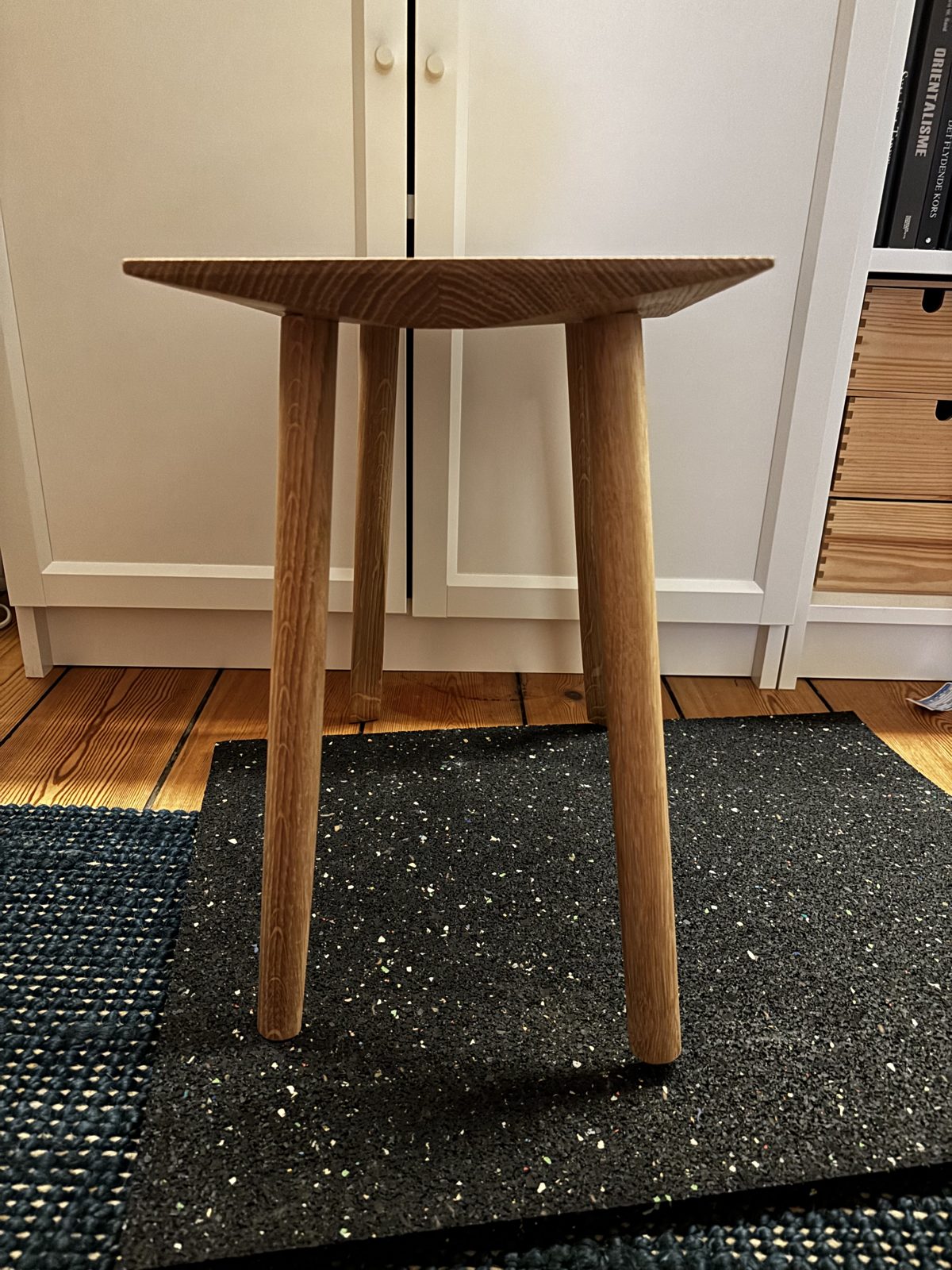
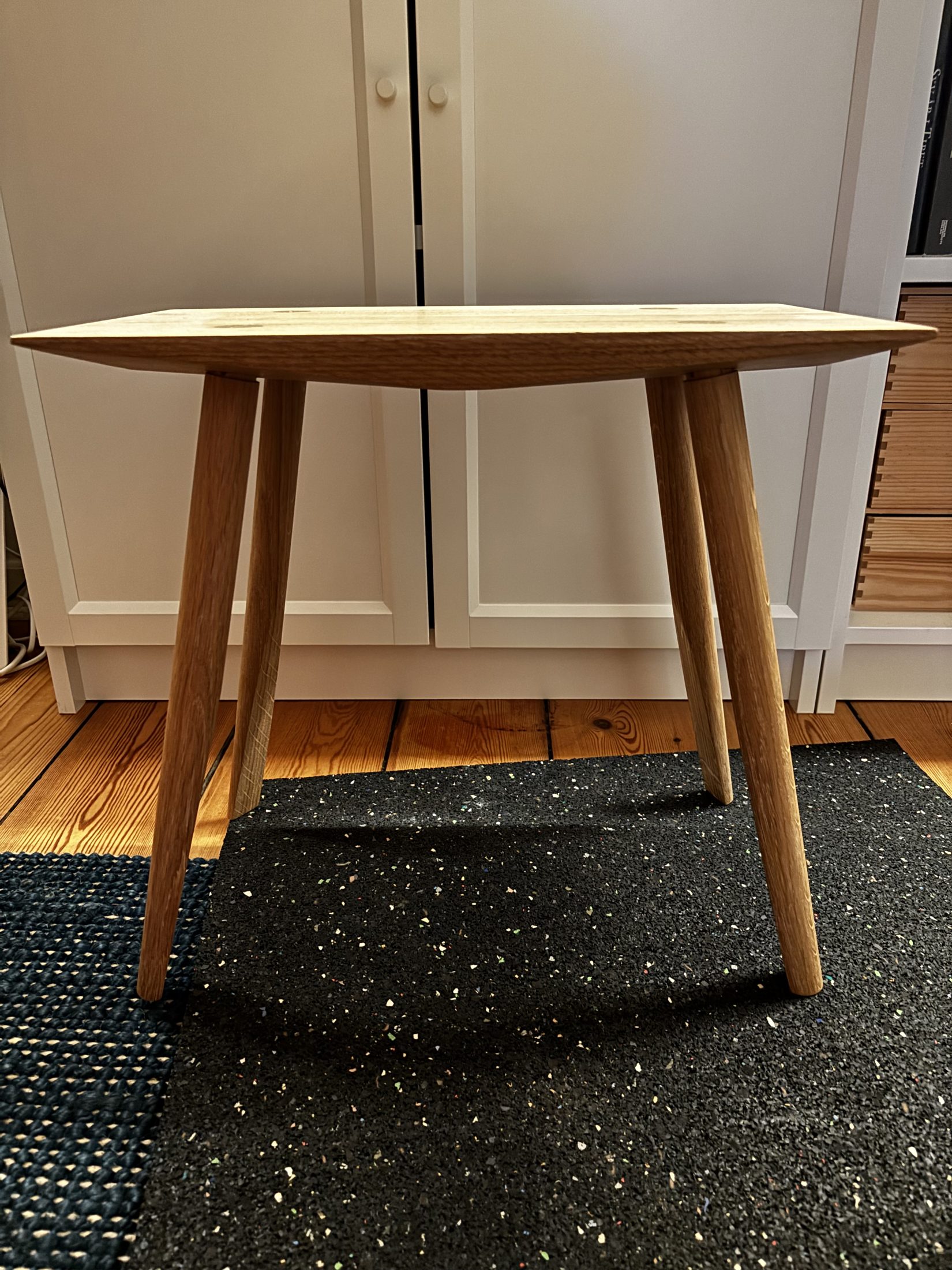
A stool built on what I see in the Itsukushima torii: a structure that seems at once steadfast and poised, made to stand for ages, and held together by joinery you can see.
The gate feels like something that will stand for ages without intruding on the landscape around it. That calm steadiness is what drew me to it, together with the craftsmanship in its joinery. Those are the qualities I wanted to carry into a piece of furniture.
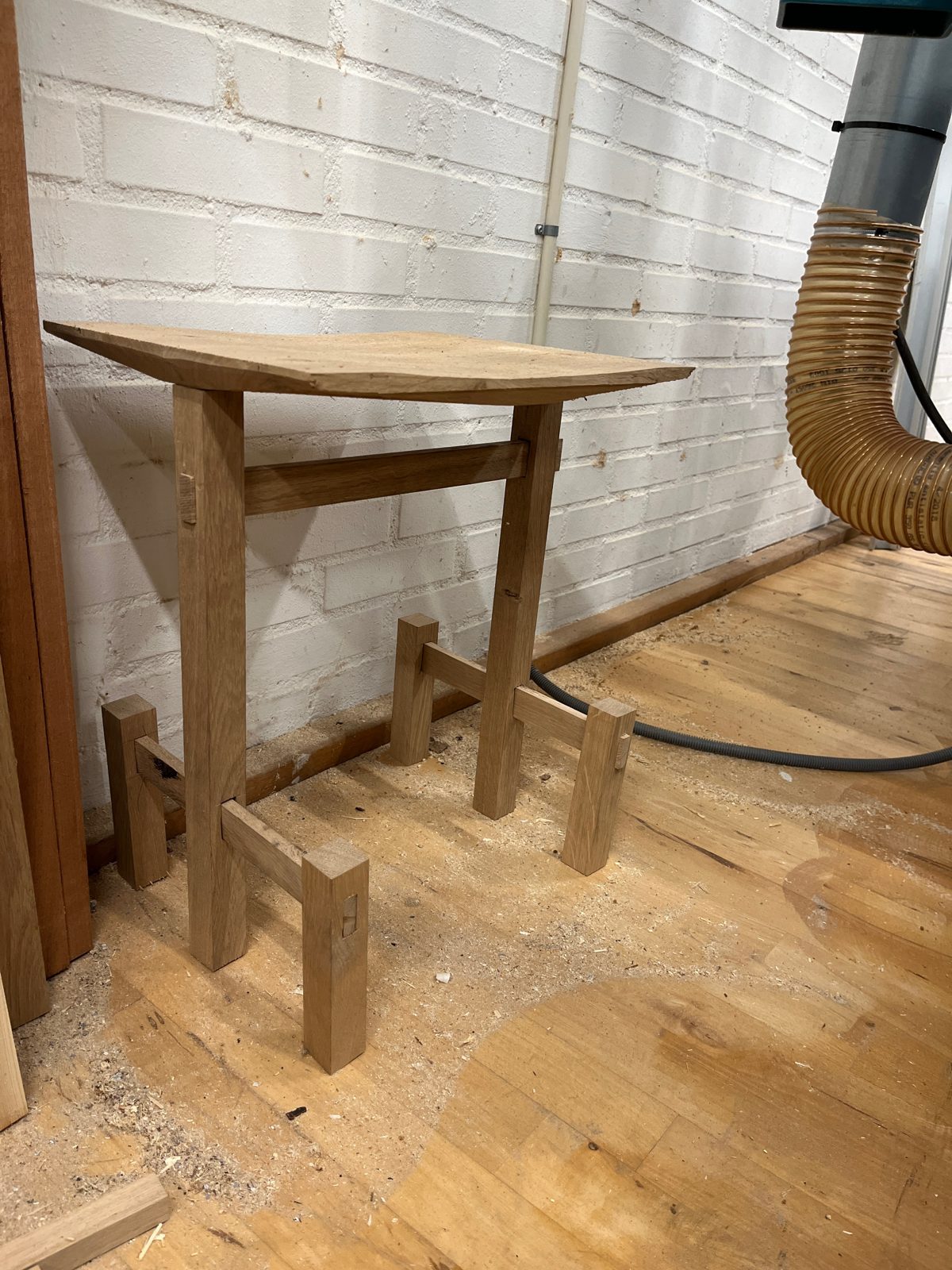
Prototype 01 explored what happens when the gate is translated directly into a stool. It became disproportionate: too bottom-heavy, both to look at and to sit on, and not sturdy enough to last. That led me to a more classic leg arrangement.
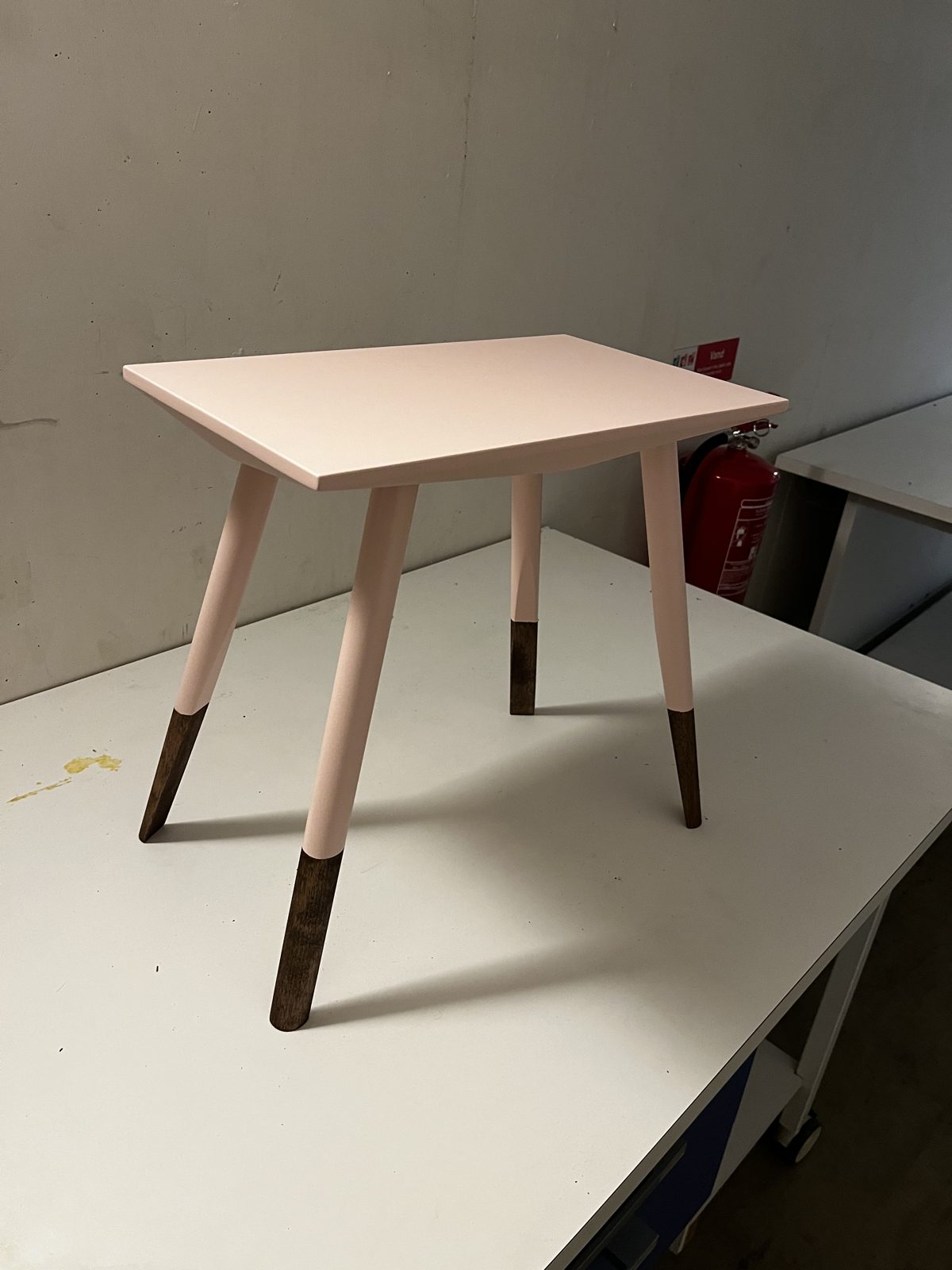
Prototype 02 kept the seat, which worked from the start, and moved to rounded legs with flat facets and stretchers between all four, for looks and stability. It still felt like too much was going on. I wanted the stretchers gone, so the attention would go to the seat, whose lines I felt carried the gate best.
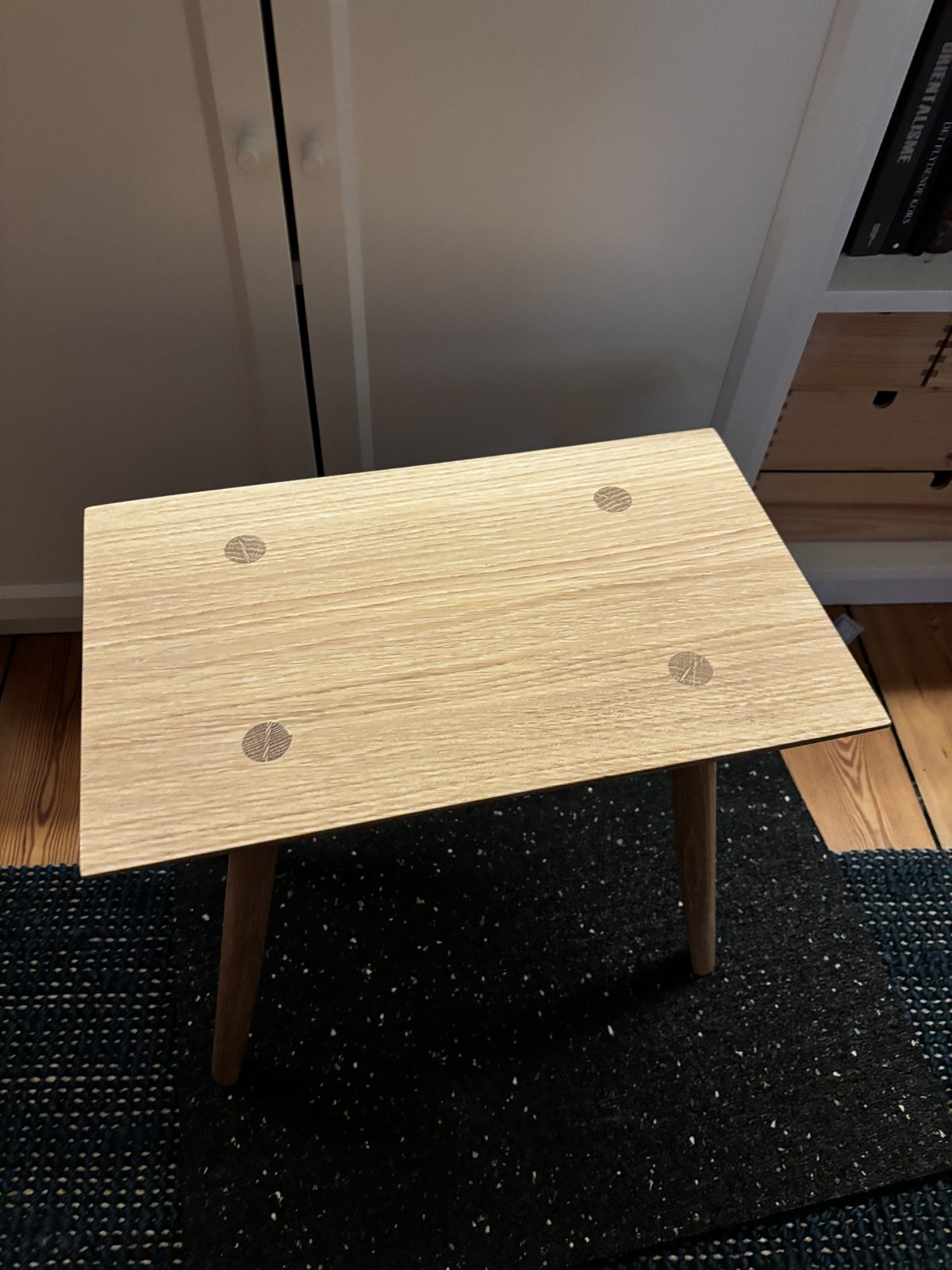
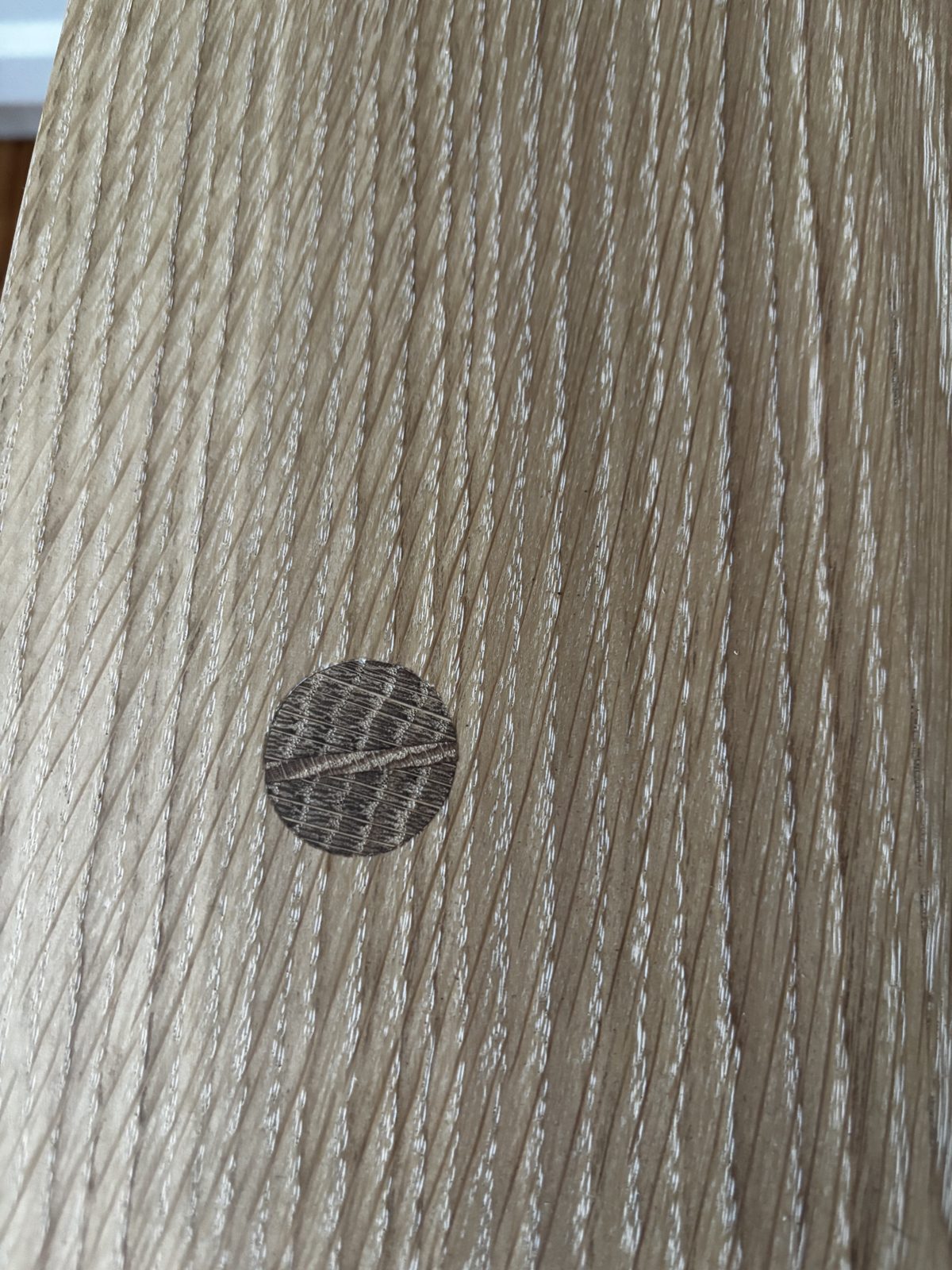
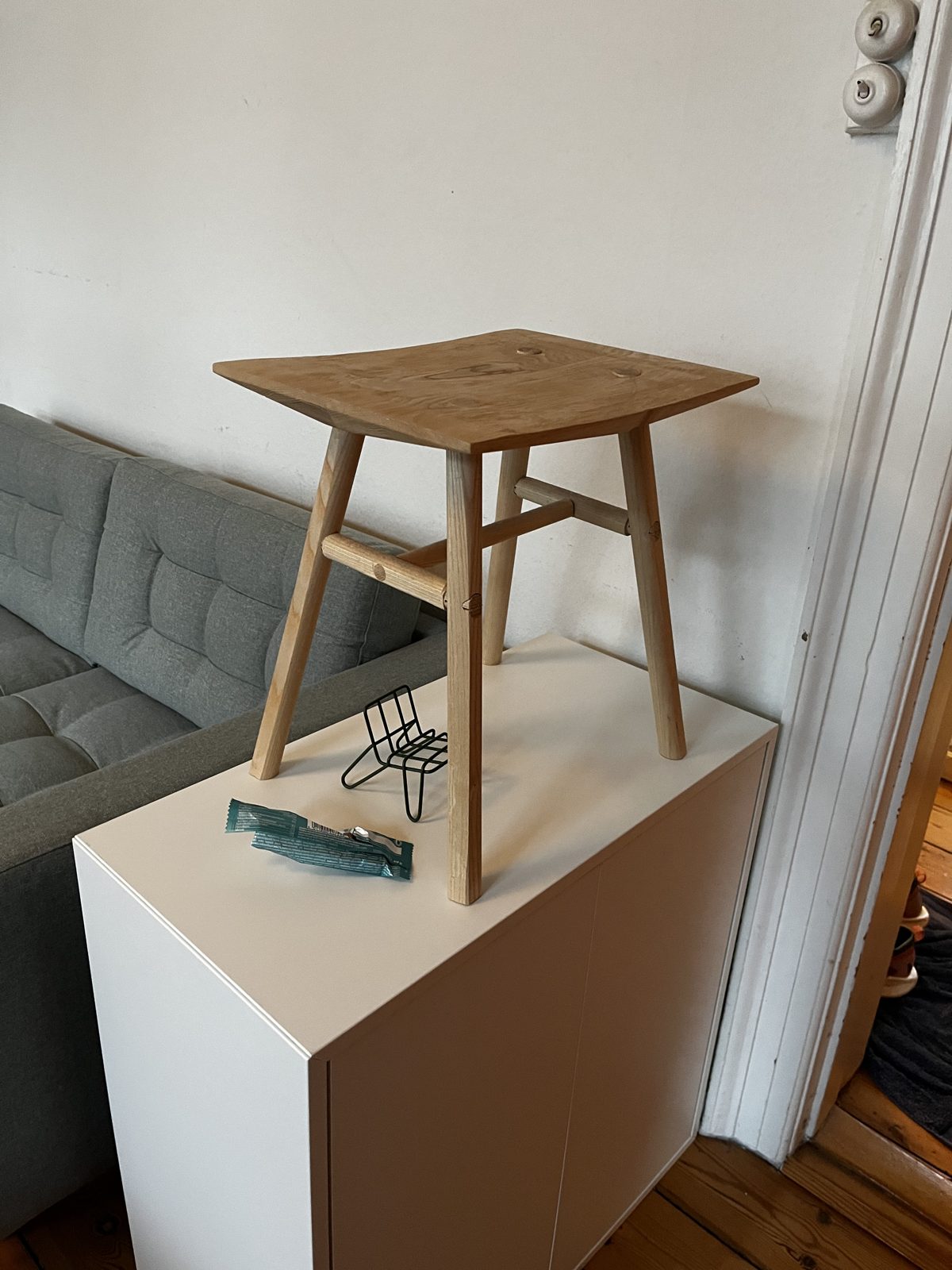
In 252 the legs are fully round and grow from 25 to 30 mm, which made the stretchers unnecessary. Each leg is sliced so only half of it remains at the foot, keeping the visual weight at the top. I tried hidden tenons and through-tenons, and kept the through-tenons: the gate has them too, if square, and they give the stool something to look at from above, where it otherwise has least to show.
The name comes from EN 252, a timber testing standard. The oak was Danish timber rejected before testing because it was too inconsistent. The stool is made in oak, smoked oak and painted beech.
- Years
- 2023–2026
- Materials
- Oak, smoked oak, painted beech
- Joinery
- Wedged through-tenons
- Type
- Personal project